Stats, Graphs, and Data Science Curriculum
George Dell's Valuemetrics.Info
Stats, Graphs, and Data Science
Course 1 and Course 2
"The class was by far the best I have ever had in 31 years of appraising."
John W. - St. Matthews, SC
Certified General Appraiser
Stats, Graphs, and Data Science
Online in Zoom or in a Classroom

Zoom courses are Hosted by The Asset Analyst Report(c) and
The Community of Asset Analysts
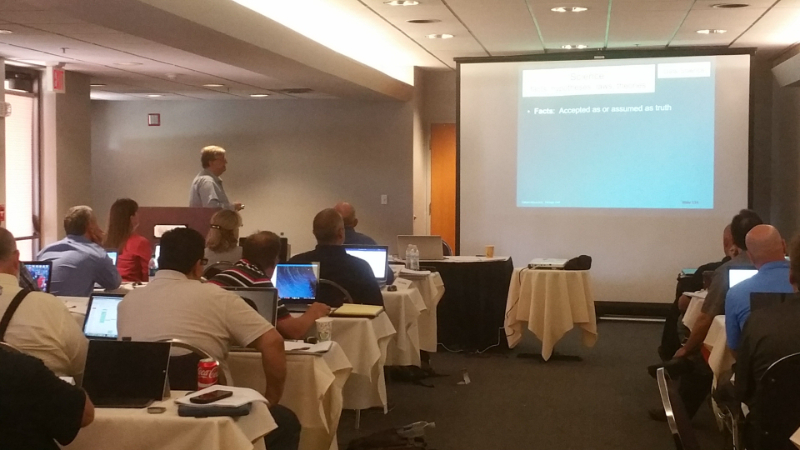
Are you interested in a live, classroom style course or do you prefer to sit at your desk and take a class from the comfort of your office or home? We offer both styles of learning.
Stats, Graphs, and Data Science 1 and 2 are intensive 14‑hour workshops that apply modern data science, predictive analytics, and practical AI tools to real estate valuation. Both are built on Evidence‑Based‑Valuation (EBV)© methods and use structured, activity‑based learning with real market data.
Where they differ is in level, focus, and outcomes:
Stats, Graphs, and Data Science 1
Level: Introductory / Core skills
Focus: Getting started with data‑driven valuation and basic modeling
SGDS1 is the entry course. It is designed for appraisers and analysts who want to move beyond canned software and traditional spreadsheets into transparent, defensible, data‑driven valuation.
You will:
Learn and practice two foundational analytical tools:
Adjustment calculation using contrasting
Simple regression
Use summary statistics and visualization (plots and graphs) to:
Select markets
Support and explain adjustments
Learn how to:
Transition from canned appraisal software and standard spreadsheets to R with RStudio
Still integrate spreadsheets where appropriate in the workflow
Use AI tools to:
Develop effective prompts
Generate, correct, and refine R/RStudio code for appraisal and data analysis tasks
Apply these tools in sparse‑data problems, including:
Estimating location adjustments
Price indexing older sales data
Software and support:
Primary tools: R with the RStudio interface
All programs, graphing, and mapping packages are provided at no cost
All example datasets are provided
Help with download and installation is available after registration
Logistics and prerequisites:
Required: Laptop for classroom courses. Desktop for Zoom courses (two screens strongly recommended).
Completion of SGDS1 is required to join the Community of Asset Analysts
Instructor team:
Lead instructor: George Dell, SRA, MAI, ASA, CRE
Additional instructors: Bruce Hahn, ARA, CAA and John Fariss, MNAA, CAA
Bonuses (SGDS1):
Reference book
Handouts
R scripts
Practice data sets
Stats, Graphs, and Data Science 2
Level: Intermediate / Advanced
Focus: Full valuation workflow, deeper analytics, and more complex models
SGDS2 builds directly on SGDS1. It assumes you are already comfortable with basic R/RStudio use, simple regression, and visualization, and takes you into end‑to‑end valuation and risk analytics with more advanced techniques.
You will:
Continue to develop the theory, concepts, and practice of data science as applied to asset analytics
Use AI tools to refine your analytical approach and R code
Download and work with a local data set to produce custom outputs relevant to your own market or practice
The learning follows the full valuation and risk‑analytics sequence, including how to:
Frame problem identification and scope of work in measurable terms
Identify the overall project data frame
Define the CMS© (Competitive Market Segment) – the ideal data set
Resolve the bias–variance tradeoff to balance accuracy and precision
Perform data wrangling (the data‑science equivalent of confirmation/verification)
Visualize the data for understanding and communication
Reduce the full data set to the CMS©
Detect and quantify missing or needed predictor variables
Create new calculated fields
Transform functional relationships (e.g., linear to logarithmic)
Create and manage transformed data levels
Identify and handle outliers
Recognize and execute predictive confirmation/verification
You will work extensively in:
R, RStudio, ggplot2, and tidyverse
Integrated workflows that combine R and spreadsheets for efficiency
Specific advanced analytics introduced in SGDS2 include:
Polynomial price indexing
Seam regression
Introduction to GIS in R
Data selection algorithms, especially hierarchical cluster analysis
Sources of help and support for advancing your R skills
Professional and standards context:
Address and reconcile differences among USPAP, AI‑SVP, GSE guidelines, and EBV© practice
Explore data‑stream delivery and dashboard‑style reporting for modern clients and users
Format and logistics:
Offered online via Zoom (two screens strongly recommended)
Instructor team:
Lead instructor: George Dell, SRA, MAI, ASA, CRE
Additional instructors/contributors:
Bruce Hahn, CCIM, MAI, SRA – independent fee appraiser using R in residential and other assignments (Reno, NV)
John Fariss, MNAA – independent fee appraiser using R in residential assignments (Bakersfield, CA)
Charles (Charlie) Abromaitis, AACI, P. App. – pioneer in valuation‑focused statistical/analytics software (London, Ontario, Canada)
All instructors are leading members of the Community of Asset Analysts©.
Included (SGDS2):
Hands‑on instruction
Open‑source data‑analysis software
State CE certification available in most states
Student attendance certificate at course completion
Bonuses (SGDS2):
Reference book
Handouts
R scripts
Practice data sets
In summary:
SGDS1 = foundational skills: basic models, visualization, getting into R/RStudio and AI‑assisted coding, focused on core adjustments and sparse‑data problems.
SGDS2 = advanced application: full valuation workflow, more complex models and methods (indexing, seam regression, clustering, GIS), and integration with standards and modern reporting.